WOODLAND MANAGEMENT
NORTHERN WIND x Keepers of the Woods
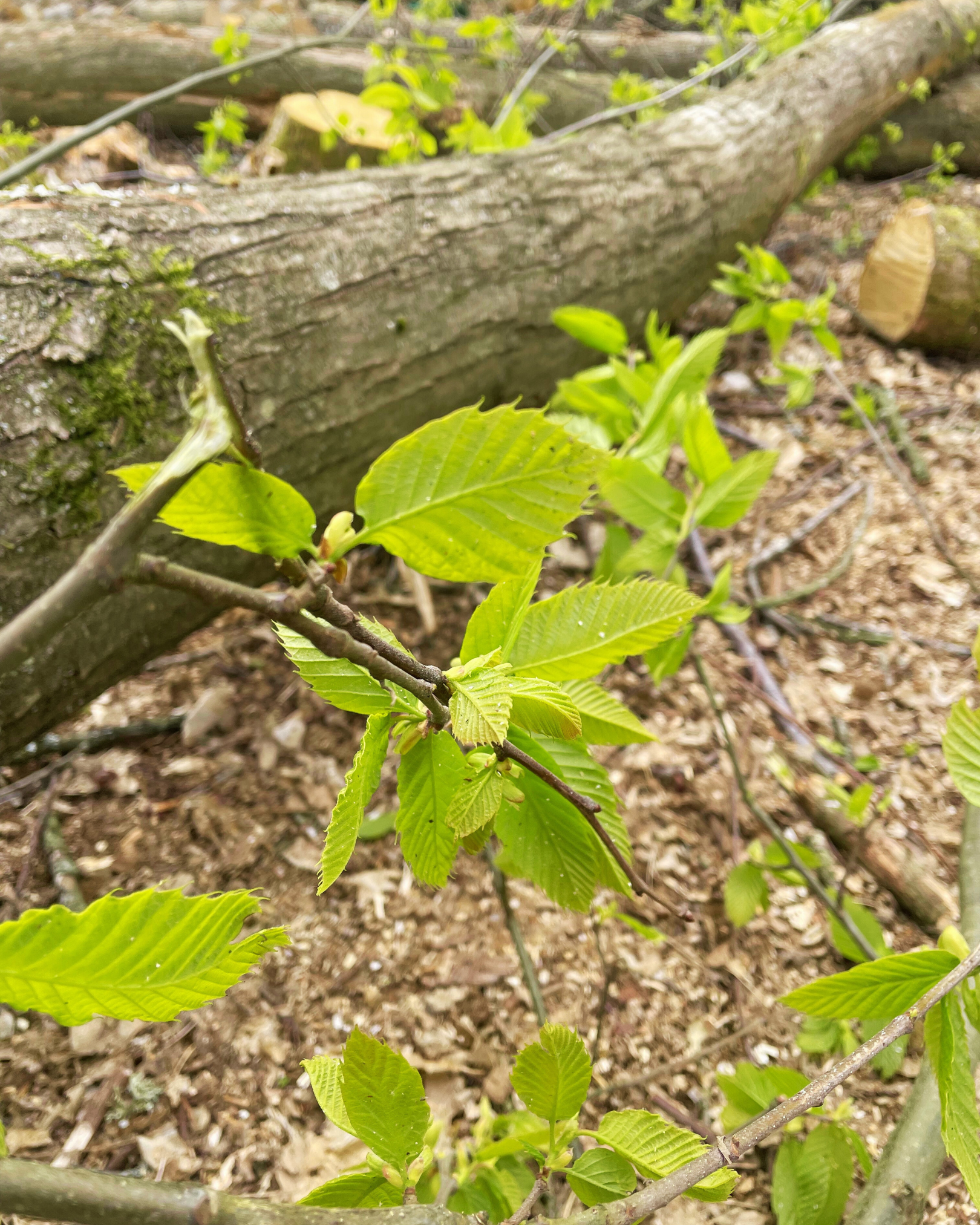
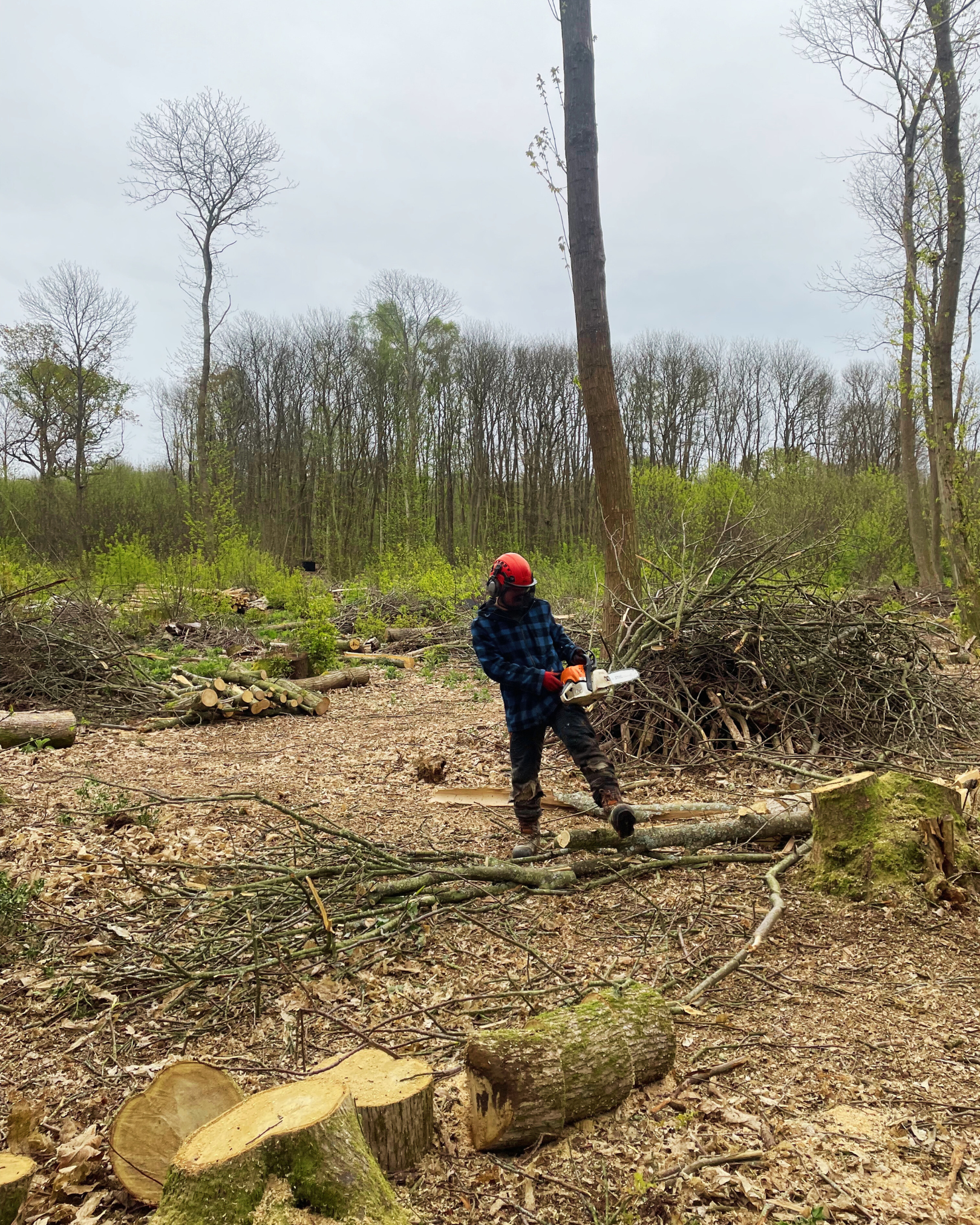
During our time immersed in woodland management practices, we were privileged to delve into the intricate art of nurturing and conserving woodland ecosystems. We had the enlightening opportunity to learn about the delicate balance between tradition and sustainability, witnessing firsthand the profound significance of small-scale management. In our exploration, we discovered how diversity thrives over vast monocultures, and how each tree tells a story of resilience and renewal.

Cyclical Coppicing
Led by a dedicated team of woodland stewards, the chestnut trees undergo a meticulously planned 17-year coppicing cycle. This intentional approach ensures that trees are harvested at the optimal time for regrowth, thus maintaining a sustainable supply of chestnut wood for various purposes. Through this careful management, the group ensures the long-term health and resilience of the woodland ecosystem.

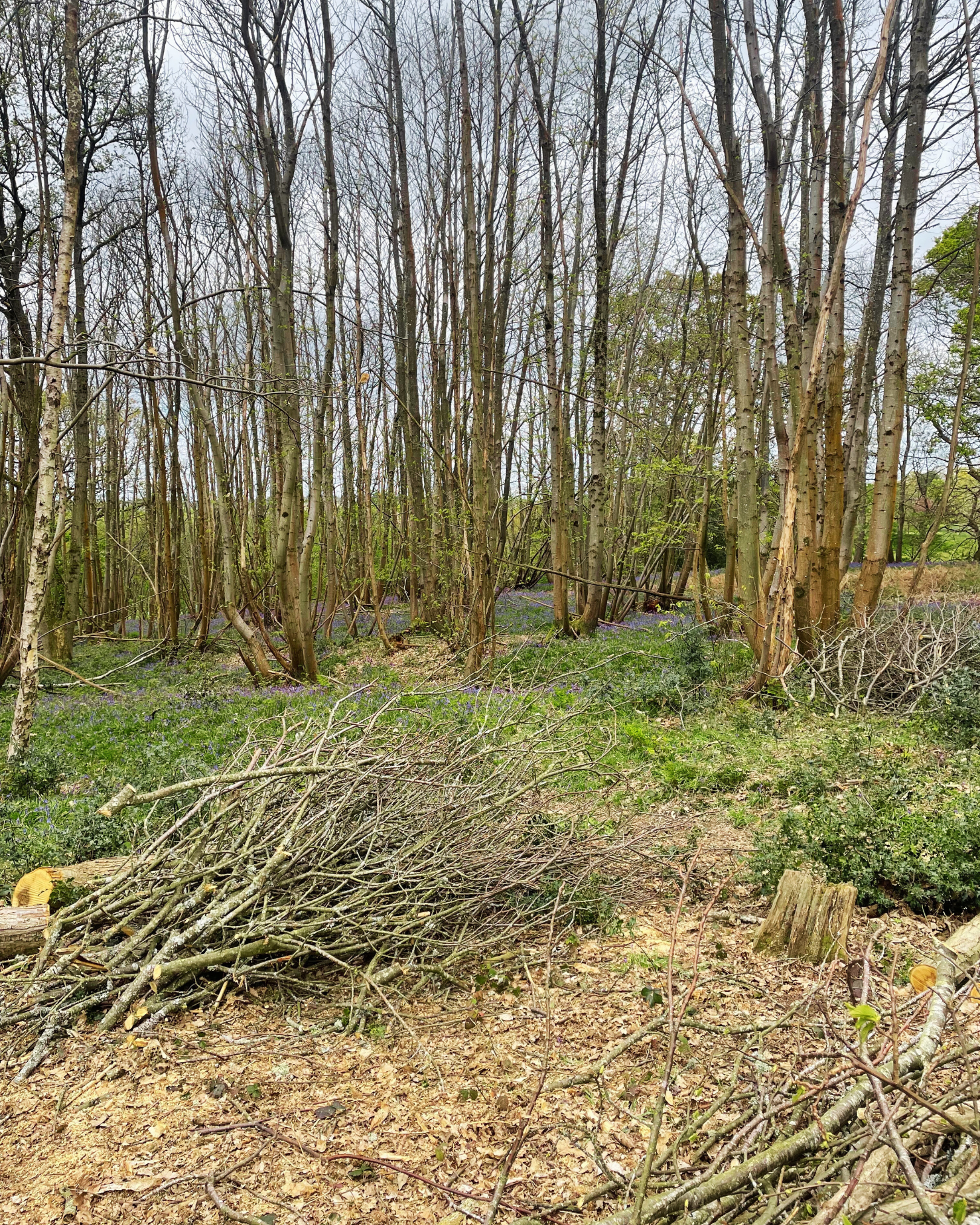

The materials obtained from chestnut coppicing are versatile and put to diverse uses by the group. Transformed into fencing materials, these locally sourced options provide a range of products for agricultural and property boundaries, showcasing the multifaceted potential of a single material. Additionally, waste wood generated from the coppicing process is repurposed into firewood, offering a renewable and eco-friendly heating source for local households and businesses.
Locally Sourced


Traditional Artistry
Chestnut coppicing is an essential practice that not only supports the woodland ecosystem but also helps to preserve traditional crafts and skills that have been passed down for generations. By continuing to cooperate, the group ensures the transmission of valuable knowledge and techniques related to woodland management and woodworking. This commitment to preserving traditional craftsmanship is a way of honouring the cultural heritage of the community and fostering a sense of pride and connection to the land.

Waste wood from chestnut coppicing is not wasted; instead, it is utilised in charcoal production by the group. By harnessing this resource, the group contributes to the production of charcoal, a valuable commodity with various industrial and domestic applications. From cooking to metallurgy, charcoal serves as a versatile fuel source, and the group's involvement in its production adds value to the local economy while promoting sustainable forestry practices.


Habitat Restoration
The cyclical nature of coppicing adopted by the group not only sustains the supply of chestnut wood but also plays a vital role in habitat restoration and biodiversity conservation within the local area.
Unlike mass cultivation methods that often result in habitat destruction and fragmentation, the carefully planned coppicing cycle offers a balanced approach. By periodically clearing sections of the woodland and allowing sunlight to penetrate the forest canopy, the group creates ideal conditions for the regeneration of understory vegetation.
This process fosters the growth of diverse plant species, including wildflowers, shrubs, and grasses, which serve as essential habitats and food sources for insects, birds, and small mammals. By promoting a mosaic of habitats across the woodland landscape, the group encourages biodiversity and ecosystem resilience.
The presence of varied habitats supports a wide range of wildlife species, contributing to the overall health and vitality of the local ecosystem. Through their dedication to sustainable woodland management practices, the group not only preserves valuable habitats but also ensures a thriving natural environment for generations to come, where flora and fauna can flourish harmoniously.